








Environmental Rehabilitation in a
Rapidly Developing Urban Area
ember 2009
v
. 4 No
ase Study l. 1 Noo
C V
Development and Damage
Decades ago, Xiamen pursued economic development
In 1988, Xiamen began phase 1 of Yuandang
with little regard for the environment. Capture fi shers
rehabilitation at an estimated cost of US$25 million.
used destructive and illegal fi shing methods. Fisheries
Infrastructure was built to intercept wastes and a sewage
stocks were overexploited. Causeways from Xiamen
treatment plant was built to treat the wastes. The city
Island to the mainland (Gaoqi-Jimei) and across the
government dredged silt out of the bottom, built tidal
mouths of Xinglin Bay, Maluan Bay, and Yuandang Bay
channels to increase water exchange with the West Sea,
built from the 1950s to the 1970s restricted natural water
and tightened enforcement of regulations on the disposal
and silt fl ow. In 1955-2005, 122 km2 of sea or 7.5 percent
of wastes. By the end of phase 1 in 1992, dissolved oxygen
of Xiamen's current land area, were reclaimed primarily
had risen from 0 to 5.2 mg/liter (Figure 1). However,
from the West Sea and Tong'an Bay. Beach sand was
total sewage had also increased by then and other water
illegally taken from the storm-vulnerable east coast of
quality parameters still failed government standards. Thus,
Xiamen Island to support the booming construction
Xiamen began phase 2 of rehabilitation at an estimated
industry. Marine aquaculture rapidly increased since
cost of US$19 million: building more waste interceptors,
the 1980s and intensifi ed with new technology in the
upgrading sewage treatment capacity, increasing tidal
mid-1990s. It covered nearly half of the sea area by 2001.
channels, actively pumping water through the tidal
Wastes from coastal aquaculture ponds and excreta and
channels, and dredging out more silt. Water quality then
excess feeds from fi sh cages polluted the sea. Nearly
met the national standards.
all domestic and industrial wastewater was discharged
into the sea untreated. Various industrial and shipping
The public and the national government praised
accidents spilled oil and chemicals into the sea. As a
government achievements in Yuandang. High-rise
consequence, coastlines and water fl ow were altered.
buildings rapidly increased in number around Yuandang,
Global Environment
Natural habitats were damaged and polluted. Mangrove
housing big names of the corporate world.
Facility
forests declined to 1.793 km2 in 1987 and to just 0.203
km2 in 1995. Major fi sh kills occurred around twice per
Yang Donghong, a real estate developer, observed
year (1984-1996), and populations of dolphins, egrets,
"In 1970s, we were losing money invested in real estate
and lancelets declined (ITTXDP, 1996a; XDPO, 1998; Xue,
because no one wanted to buy the houses around this
et al., 2004; Lin, et al., 2005; PEMSEA, 2006a & b).
area (Yuandang) due to its bad environment. Fortunately,
the government paid attention to it, and began to repair
United Nations
A Lesson from Yuandang
Yuandang Lagoon and got good results. Our industry has
Development Programme
boomed, we investors got great profi ts."
The situation was especially bad in Yuandang. This bay
had once sheltered huge fl ocks of egrets that earned
The Yuandang rehabilitation had been costly but this bay
Xiamen its nickname "Egret Island". By the early 1980s,
was in a very prominent location of the city. Rehabilitation
the bay had been cut off from the sea by a causeway
was mandated by national government, and so was hard
and reclamation, and untreated industrial and domestic
to ignore. The West Sea was also in a prominent location
United Nations Offi
ce for
Project Services
wastewater was being discharged into the bay. The
and polluted. It was larger and was the site of confl icts
waterbody shrank to just one-fi fth of its original surface
between among economic sectors: aquaculture, shipping,
area. The foul smell repulsed would-be investors and
tourism, and pollutive coastal industries. Government
red tides often arose on the lake. The fl ocks of egrets
funds were limited and environmental management
disappeared. Residents began leaving the area (PEMSEA,
was not directly an income-generating activity. Would
2006b). The National Environmental Protection Agency
cleaning up the West Sea, which would be costlier than
Partnerships in
Environmental Management
blacklisted the site giving the local government a
Yuandang, be worth the cost? Would cleaning up less
for the Seas of East Asia
deadline to clean up the lake.
central areas be worth the cost?
1


120
100
80
60
mg/liter 40
20
0
1982
1984
1986
1987
1990
1991
1992
1993
1994
Dissolved Oxygen
Chemical Oxygen Demand
Biological Oxygen Demand
Suspended Solids
Ammonia
Figure 1. Water quality in Yuandang (from data in Hao, 1998).
Integrated Coastal Management
The multisectoral interaction and the joint strategy
also facilitated the articulation of a zoning plan which
In 1994, the GEF/UNDP/IMO's Regional Programme for
reduced confl icts among sectors by allocating each use to
the Prevention and Management of Marine Pollution
various areas according to the optimal uses of each area's
in the East Asian Seas (MPP-EAS) introduced integrated
resources. In 1997, "Regulations for the Management of
coastal management (ICM) to Xiamen. MPP-EAS began
Sea Area Use in Xiamen" consciously chose large-scale
supporting the integration of science into management
removal of pollutive aquaculture in favor of shipping and
decisionmaking, supporting the integration of both
tourism in the West Sea. Also, despite inconvenience to
socioeconomic and environmental considerations,
its top earning shipping and tourism industries, Xiamen
and facilitating cooperation among various sectors. In
issued in 1997 the "Regulation for the Protection of
addition to supporting the development of an integrated
Chinese White Dolphins". Aquaculture operations were
coastal profi le and a joint strategic plan, the programme
phased-out and compensation was paid out to help shift
also supported an assessment of the Yuandang project
aff ected sea farmers to other locations or occupations
including its benefi ts and costs, an environmental profi le,
(Ruan and Yu, 1999).
a pollution management plan for Xinglin Bay, and sea use
zoning (MPP-EAS, 1999).
Commissioned technical studies estimated the economic
damage of pollution and the value of improving the
The coastal environmental profi le (ITTXDP, 1996a)
environment. This was done through environmental
showed that even as the various bureaus were each
monitoring and interviews of the public regarding its
trying to reduce pollution in their individual sectors,
willingness-to-pay and of investors relocating around
there was no eff ective operational mechanism for
Yuandang. The studies showed that individuals were
bureaus to coordinate their individually limited eff orts.
willing to pay an average of US$34/year to manage
There was also no mechanism for bureaus managing
fi sheries, endangered species, and beaches and to
confl icting activities to jointly decide to favor one sector
treat sewage (Abansi, 1999). Fifty-three percent of 173
over another to optimize overall societal benefi ts. ICM
investors cited the good environment as a reason for
helped Xiamen's various government bureaus better
locating around Yuandang. Despite the estimated total
understand the usefulness of interagency cooperation
rehabilitation cost of between US$43.75 million and
and helped them better understand the need for sectoral
135.5 million, Yuandang's central location helped it yield
bureaus to support the objectives of other sectors for
a benefi t-cost ratio estimated at 9:1! This helped convince
overall holistic development. In particular, ICM helped
Xiamen's leaders that good environmental management
emphasize the importance of sustainability in Xiamen's
could return social and economic benefi ts. As early as
drive for development. Together the various sectoral
the fi rst phase of the ICM program, the city government
bureaus forged a joint Strategic Management Plan for
initiated Xinglin Bay rehabilitation including sewage
Marine Pollution Prevention and Management in Xiamen
treatment and tightening enforcement of waste disposal
based on the city's overall vision of "a socialist, modern,
regulations applying the framework and approaches of the
international, and scenic port city" (ITTXDP, 1996b).
Xiamen Demonstration Project (MPP-EAS, unpublished).
In support of the initiative, the municipal legislative
Later, the second phase of the GEF/UNDP/IMO Regional
assembly issued "Regulations for Marine Environmental
Programme helped expand the ICM program by
Protection and Management" in 1996.
supporting the development of a feasibility study for the
2





rehabilitation of Maluan Bay and the management of
initiated a US$87 million project for rehabilitating and
Jiulong River Basin.
managing Maluan Bay (West Sea) then continued to
invest signifi cant amounts in a program for rehabilitating
Rehabilitation of coastal areas
various other areas (Table 1, Figure 2). Among its more
recent projects is the US$2 billion Tong'an Bay Integrated
Nature protected areas were set up for lancelets in 1991,
Rehabilitation Project began in 2006 (Lin, 2008). Xiamen
Chinese egrets in 1995 and Chinese white dolphins
has invested a total of US$2 billion in sewage treatment
in 1997 (PEMSEA, 2006a). In addition to protecting
over the last 20 years (XOFB, 2009). Treatment of industrial
remaining natural features, the rehabilitation program
sewage rose from 20 percent in 1994 to nearly 100 percent
also exerted a lot of eff ort to open and reconstruct
in the 2000s while treatment of domestic sewage rose
causeways, build sewage treatment plants, return and
from 28 percent in 1995 to 85 percent in 2007 (Zhang,
retain beach sand, and revive populations of plants and
unpublished; PEMSEA, 2006a). Green area as a ratio of total
animals.
land area has risen from 27 percent in 1995 to 37 percent
in 2007 (Zhang, unpublished). Modern business centers,
After investing in the rehabilitation of Xinglin Bay, Xiamen
convention areas, landscaped parks, and beaches now
Table 1. Summary of environmental rehabilitation activities by area (Pei, 2008).
Area (timeframe)
Issues
Actions
Results
Yuandang Bay (1988-
· Causeway construction
· Interception of waste
· Water quality has improved
1996)
· Reclamation for agriculture
· Sewage treatment plant
considerably.
· Decreased water fl ow
· Improving water exchange
· Egrets have returned.
· Silt accumulation
· Dredging sludge
· Area surrounding Yuandang is
· Cleansing wastes with the help
pleasant.
of mangroves and seaweeds
· Real estate values have risen.
Xinglin Bay
· Yintan-Xiamen railway cutoff
· Aquaculture removed
· Flood and drainage were controlled.
(1995-2005)
· Xinglin Bay from the sea
· Dredging
· Xiamen Garden Expo Park was
· Aquaculture developed inside · Landscaping and park
developed.
development
West Sea, including
· Excessive aquaculture
· Aquaculture removed
· Dolphins are now more common.
Maluan Bay
· Causeway decreased water
· Reclamation restricted
· Water fl ow is expected to increase
(2002-present)
fl ow
· Opening of causeway
(30 million m3), as well as increase
· Degradation of wetlands
· Dredging out sediments
coastline (14 km) and sea areas (8 km2).
· Construction of shore
protection and wetlands
Wuyuan Bay (2005-
· Seawall construction
· Opening of seawall
· Reclaimed land of 0.013 km2 was
present)
Reclamation for farmland
· Dredging
returned to sea.
Decreased water fl ow and silt
· Keeping water level in dams low
· High-tech park and business center
accumulation
were developed. (developed already)
Uninhabited islands
· Revegetation and landscaping
· Beautiful landscapes appeared on
(2005- present)
Monkey and Lantau Islands.
East Coast, including
· Gaoji causeway and Jixing
· Opening and rebuilding
· Reclaimed land of 4.5 km2 was
Tong'an Bay (2006-2013)
seawall
of causeway and seawall;
returned to sea.
dredging; reclamation between
· Rehabilitation is ongoing.
Dadeng and Xiaodeng
XiangshanChanwei,
· Mining sand from the beach
· Beach rehabilitation with
· Beach is now protected from sand
Guanyinshan, and
artifi cial sand
extraction and is used for public
Eastern beach
· Removing stones, replenishing
recreation and tourism.
(2007-2009)
sand, and stabilizing slope
3



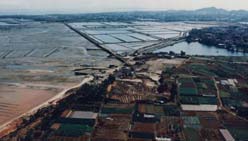
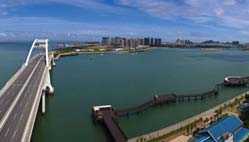

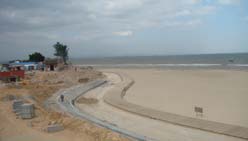
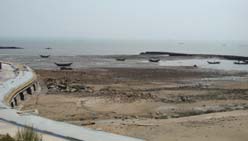




Xiangan before
Xinglin before
Tongan before
Tongan after
Xiangan after
Xinglin after
West Sea before
Houyu Island before
Houyu Island after
West Sea after
Yuandang before
Wuyuan Bay before
East beach before
East beach after
Yuandang after
Wuyuan Bay after
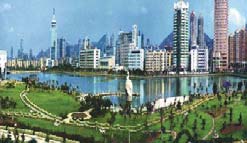
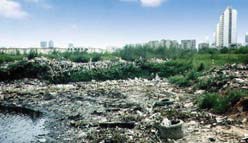
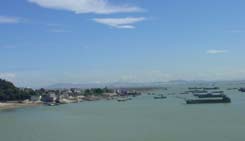
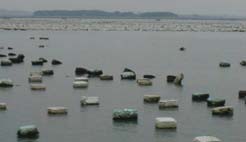
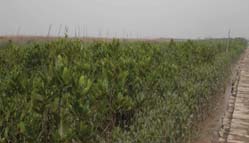
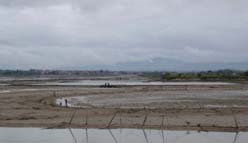
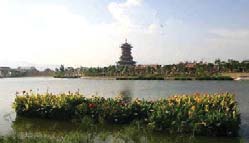
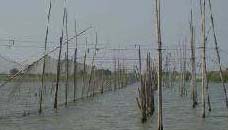
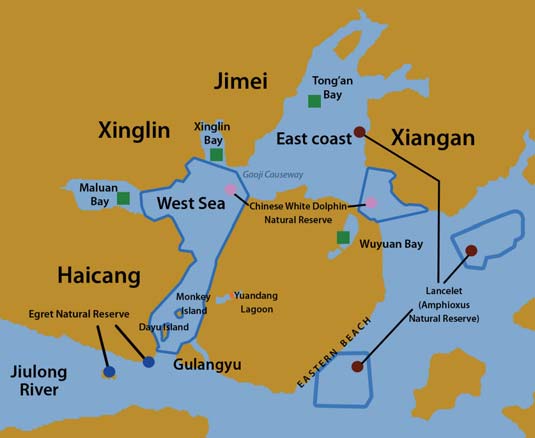
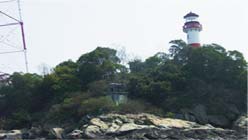
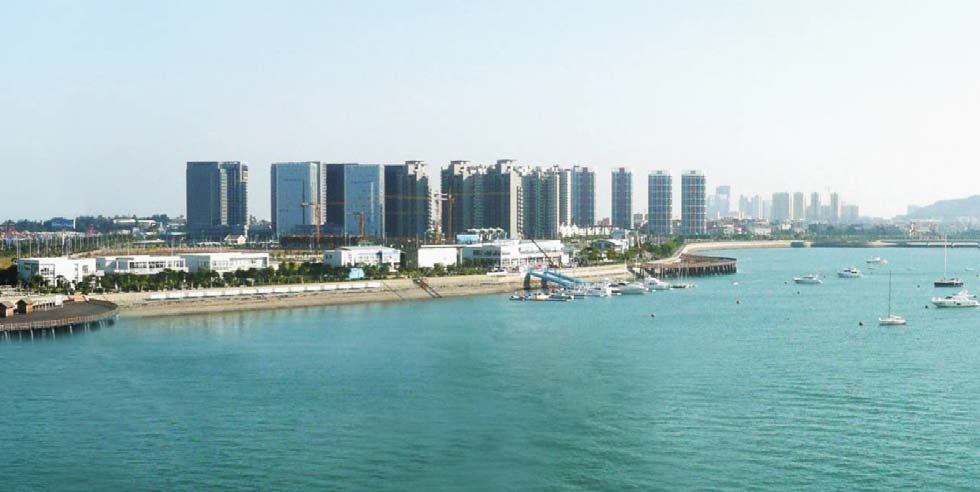
Figure 2. Map showing location of protected and rehabilitation areas surrounded by pictures for each site showing before and
after rehabilitation.
make Xiamen attractive for both work and play.
beginning in 2005. Fish catch of both Pagrosomus major
and Pseudosciaena crocea has increased since 2003
Rehabilitation of selected species
compared to a slump before 2002 (Zhang, unpublished).
"Plan on mangrove planting", "Plan on wetland protection
Xiamen also began helping selected species recover by
in Xiamen", and "Program on the Construction of Shelter
releasing artifi cially bred prawns (Penaeus penicillatus,
Forest" were developed. By 2006, nearly 0.27 km2 of
Penaeus japonicus) and fi sh (Sparuslatus sp., Pagrosomus
mangrove forests had been planted. Although still much
major, Pseudosciaena crocea) beginning in 2002, and
less than what it used to be, mangrove abundance has
horseshoe crabs and lancelets (Branchiostoma belcheri)
since risen to 0.40 km2 and 0.60 km2 more mangroves
4
are to be planted. These mangroves and other suitable
ICM Delivers Results
tree species planted on the eastern shore of Xiamen
Island are expected to help reduce erosion, cleanse water,
The ICM program has remained relevant to development
and protect against more extreme storms expected
priorities through various changes in leadership and fi ve-
with climate change. Xiamen has established a warning
year plans. It has helped various sectors in Xiamen realize
system for and removed several square kilometers of alien
that environmental quality matters to their sector and to
cord grass species and has improved implementation
overall social and economic development. Its relevance
of regulations to reduce the transport of alien species
and attractive benefi t-cost ratio have put environmental
through ship ballast water. Egrets have returned and
rehabilitation into laws and plans and have helped it get
dolphins have more than doubled (XOFB, 2009).
personnel, funding, and sustained on-the-ground action.
Although these rehabilitation programs will not be able
Getting things done
to return the many damaged areas to their pre-industrial
state, they have nevertheless considerably improved
Early on, it was evident that Xiamen exhibited one of the
environmental conditions and made Xiamen a very
key principles of ICM: policy-functional integration, that is,
pleasant place to live in. The rehabilitated natural habitats
implementing policy. After development of a profi le and
and species are under less stress and are thus more robust
strategy, Xiamen crafted an appropriate policy and legal
to more intense climate variability expected in the coming
framework which it then translated into laws, regulations,
years.
and plans. More importantly, Xiamen then allocated
human and fi nancial resources to carry out fi eld action.
Zhou Lumin, Deputy Director of the Xiamen Oceans and
Fisheries Bureau, stated that "ICM is playing a great role in
The government remains as the major fi nancier of
solving the tension between development and protection,
environmental rehabilitation, but the private sector
as well as sea-use confl ict, in the context of rapid economic
investors have also been involved in providing
development, urban expansion, increasing population, and
environmental services (Figure 3). Funds were also
growing pressure on resources and the environment."
generated by levying fees for the use of sea areas, waste
disposal, and exceeding waste standards. Landscaped
Xiamen's incorporation of sustainability considerations
areas were developed into business parks and property
in its pursuit of development has delivered results and
sold or leased for large sums. Even dredging materials
won it many awards: the 1997 National Model City for
have been used to reclaim sea areas that were then
Environment Protection, the 2002 International Garden
auctioned off to generate funds. Funds generated from
City Award, the 2004 UN Habitat Scroll of Honor Award,
sea area use are allocated for marine management and
the 2005 National Sanitary City Award, and China's 2005
help support costs of the management program.
Top Ten Livable Cities Award. Xiamen has not only become
800
700
600
500
400
300
200
100
Investment in waste management (in millions RMB)
0
1992
1993
1994
1995
1996
1997
1998
1999
2000
2001
Sewage (Government)
Solid Waste (Government)
Sewage (Private)
Solid Waste (Private)
Figure 3. Government and private investments in environmental services (PEMSEA, 2006a, based on data from
Xiamen statistics yearbooks, 1992-2002 and Xiamen environmental statistics, 1995-2001).
5
more sustainable, its beauty has also attracted immigrants,
for natural processes to clean the water.
tourists, and real estate development. A sense of pride in
It has also developed partnerships and is
the beauty of their city has also grown in Xiamen's people.
contributing fi nancially to adjacent cities to
reduce the infl ux of silt, and agricultural and
Dr. Yu Xingguang, Director of the Third Institute of
other pollution into Xiamen via Jiulong River
Oceanography said, "The environmental restoration project
(Zhou, 2007).
in Xiamen like the rehabilitation of Xiamen East Sea and
West Sea is advanced and is a demonstrative model for
Xiamen not only continues to regularly allocate
China. It is rare that a city has initiated ecological restoration
eff ort in ICM and environmental rehabilitation
and paid attention to the harmony of human and nature in
to facilitate its own sustainable development. It
the development of its economy."
has also become an active proponent in using
and sharing these lessons beyond its borders.
Much still remains to be done to repair the extensive
Xiamen has been sharing its lessons with other
damage to the environment. Moreover, despite much
cities by hosting the annual Xiamen World Oceans
rehabilitation work and the rapid rise in wastewater
Week and leading the PEMSEA Network of Local
treatment, the following still persist:
Governments (PEMSEA, 2009).
· A lot of previously disposed of waste continues to
In the late 1980s, Xiamen aimed to be a "SEZ
exude pollutants.
[Special Economic Zone] which is economically
· Xiamen's population and economic production
prosperous, and has advanced science and
continue to increase very rapidly.
technologies, a beautiful environment, and a high
· A signifi cant proportion of nutrient pollution
degree of social civilization, and which implements
continues to fl ow in from adjacent upstream cities
certain policies of a free port" (Erjun, 1988) by
through the Jiulong River. Nutrient pollution has thus
2000. In the mid-1990s, Xiamen envisioned a
continued to increase (Figure 4).
"socialist, modern, international, and scenic port
· Maluan Bay, Jiulong River estuary and West Sea are
city" by 2000. It has certainly achieved these.
the major polluted areas (Figure 5). In response,
Xiamen has followed through on initial studies for
Lessons Learned
Maluan Bay and Jiulong River Basin developed during
ICM phase 2. The city government has removed
· The socioeconomic benefi ts of environmental
aquaculture, opened up the causeway, and dredged
management are much higher than its
out silt in Maluan Bay; however, more time is needed
costs. It can even justify billions of dollars
1
0.1
mg/liter
0.01
1986 1987 1988 1989 1990 1991 1992 1993 1994 1995 1996 1997 1998 1999 2000 2001 2002 2003 2004 2005 2006 2007
N in West Sea
N in East Sea
P in West Sea
P in East Sea
Figure 4. Nitrogen and phosphorus pollution in the East and West Seas.
6



Figur
F
e 5
igure . I
5 Int
n e
t g
e r
g at
r ed assessment of sea
ated assessment of
wat
sea
er qualit
water quality in Xiamen 2008.
y in Xiamen 2
2008
of investment if used wisely. There are many means
· To help carry good policy directions through
of raising revenue for and from the environment,
to fi eld actions, there must be strong political
including taking advantage of the increase of real
will backed by a management and an eff ective
estate value due to environmental improvements.
enforcement mechanism institutionalized
within the government through legislation,
· To manage eff ectively, coastal managers have to focus
relevant objectives, sound scientifi c basis, and
on the objective and sometimes look beyond one's
broad public support fostered by high public
area and sector of jurisdiction.
awareness.
· An environmental rehabilitation program must
· Larger investments are sometimes needed
contribute to both socioeconomic development as
to repair environmental damage which has
well as sustainability priorities if it is to be relevant
occurred as compared to the costs of simply
and sustained. It must be mainstreamed in various
protecting the environment early on. Moreover,
economic sectors to achieve those. ICM can facilitate
human interventions can only do so much.
mainstreaming.
It can still take a long time for nature to heal.
7
Early investments in environmental management
Pei, J.J. 2008. "Strengthen marine management and construct marine
ecological civilization. In Secretariat of World Ocean Week in Xiamen
can have unforeseen benefi ts such as improved
2008, ed. Collected papers (Chief Forum), Xiamen, P.R. China: Xiamen
robustness to climate change.
Ocean and Fisheries Bureau.
PEMSEA (Partnerships in Environmental Management for the Seas of East
Asia). 2006a. A perspective on the environmental and socioeconomic
Prepared by Andre Uychiaoco, PEMSEA; Xue Xiongzhi, Xiamen
benefi ts and costs of ICM: the case of Xiamen, PR China. PEMSEA
Technical Report. No. 17, 132 p. Quezon City, Philippines: GEF/UNDP/
University; Dong Meiyan, Xiamen University; Yao Xinyue,
IMO PEMSEA.
Xiamen University; Zhuang Lifang, Xiamen University; Zhang
PEMSEA (Partnerships in Environmental Management for the Seas of East
Xiaoyin, Xiamen University; Ye Qing, Xiamen Ocean and
Asia). 2006b. Xiamen: an ICM journey. 2nd ed. PEMSEA Technical
Fisheries Bureau; Jin Zhuxing, Xiamen Ocean and Fisheries
Report No. 18, 86 p. Quezon City, Philippines: GEF/UNDP/IMO PEMSEA.
Bureau; and Lin Huaiyuan, Xiamen Ocean and Fisheries
PEMSEA (Partnerships in Environmental Management for the Seas of East
Bureau.
Asia). 2009. "Charting the future course of the PNLG." Retrieved on 28
September 2009 from http://pemsea.org/about-pemsea/pemsea-
news/charting-the-future-course-of-the-pnlg/.
References
PEMSEA (Partnerships in Environmental Management for the Seas of East
Abansi, C.L. 1999. "A contingent valuation survey on willingness to pay:
Asia). "The recovery of Yuan Dang Lake." PEMSEA's notes for ICM
case studies in Batangas, Philippines and Xiamen, China", p. 201-207.
practitioners. (Unpublished).
In Chua, T.E. and Bermas, N., eds. Challenges and opportunities in
managing pollution in the East Asian Seas. MPP-EAS Conference
Qin, Y. and Xue, X. 2009. "The integration and embodiment of the
Proceedings 12/PEMSEA Conference Proceedings 1, 567 p. Quezon
management concept based on ecosystem in the integrated
City, Philippines: GEF/UNDP/IMO Regional Programme for the
management of local coastal zone." Ocean Development and
Prevention and Management of Marine Pollution in the East Asian
Management 26 (4).
Seas.
Ruan, W.Q. and Yu, H.M. 1999. Design and implementation of marine
No author. 2009. Xiamen City Guide: Economic Overview. Retrieved on 28
functional zoning scheme in Xiamen, China, p. 341-354. . In Chua,
September 2009 from E-Chinacities.com. http://www.echinacities.
T.E. and Bermas, N., eds. Challenges and opportunities in managing
com/Cityguide/Xiamen/Biz/.
pollution in the East Asian Seas. MPP-EAS Conference Proceedings 12/
PEMSEA Conference Proceedings 1, 567 p. Quezon City, Philippines:
Erjun Z. 1988. "Successfully build up the Xiamen Special Economic Zone."
GEF/UNDP/IMO Regional Programme for the Prevention and
China Red Flag 3: 1-6. Foreign Broadcast Information Service JPRS
Management of Marine Pollution in the East Asian Seas.
Report.
Sina Web. 2009. "Xiamen won't encounter huge tsunamis and has three
Hao, S.Q. 1998 (they were used both in 1994 and 1998 but 1994 was in
potential dangerous zones." Retrieved on 13 September 2009 from
draft form). "Yuandang Lagoon Integrated Treatment Project." In:
http://news.sina.com.cn/c/2009-05-28/053815697711s.shtm .
Lecture Notes of the Regional Training Course on the Application
of the Integrated Coastal Management System for Marine Pollution
Statistics Bureau of Xiamen Municipality. 20042008. Yearbook of Xiamen
Prevention and Management, 7-26 September 1998, Philippines,
special economic zone. China: Statistics Press.
PR China and Singapore. Quezon City, Philippines: GEF/UNDP/IMO
Regional Programme for the Prevention and Management of Marine
Lin, T., Xue, X.Z., Shen, S., and Lu, C.Y. 2005. "Systematic analysis of coastal
Pollution in the East Asian Seas.ICM Training Materials. Institution???
wetland changes and their ecological impacts: a case study in Xiamen,
China." Environmental Informatics Archives 3: 137-145.
ITTXDP (Integrated Task Team of the Xiamen Demonstration Project). 1996a.
Coastal environmental profi le of Xiamen. MPP-EAS Technical Report
XDPO (Xiamen Demonstration Project Offi
ce). 1998. Integrated coastal
No. 6. Quezon City, Philippines: GEF/UNDP/IMO Regional Programme
management in Xiamen, 1994-1998. Quezon City, Philippines: GEF/
for the Prevention and Management of Marine Pollution in the East
UNDP/IMO Regional Programme for the Prevention and Management
Asian Seas.
of Marine Pollution in the East Asian Seas.
ITTXDP (Integrated Task Team of the Xiamen Demonstration Project). 1996b.
XOFB (Xiamen Ocean and Fisheries Bureau). 2009. Bulletin of marine
Strategic management plan for marine pollution prevention and
environmental quality in Xiamen 2008.
management in Xiamen. MPP-EAS Technical Report No. 7. Quezon City,
Philippines: GEF/UNDP/IMO Regional Programme for the Prevention
Xue, X., Hong, H., and Charles, A.T. 2004. "Cumulative environmental impacts
and Management of Marine Pollution in the East Asian Seas.
and integrated coastal management: the case of Xiamen, China."
Journal of Environmental Management 71: 271-283.
Lin, H.Y. 2008. "From local demonstration to regional partnership: integrated
coastal management experiences in Xiamen." Presentation at the
Xue, X., Hong, H., Xu, X., and Wang, C. "A review of integrated coastal
PEMSEA/Japan Joint Seminar on Integrated Coastal Management in
management in Xiamen over the past decade." Xiamen, P.R. China:
the Seas of East Asia, 18 July 2008, Tokyo, Japan.
Xiamen University. (Unpublished).
MPP-EAS. 1999. Terminal report: sharing lessons and experiences in marine
Ye, Q. Xiamen Ocean and Fisheries Bureau. (Personal communication).
pollution management. Quezon City, Philippines: GEF/UNDP/IMO
Regional Programme for the Prevention and Management of Marine
Zhang, X.Y. "Draft state of the coasts report of Xiamen." (Unpublished).
Pollution in the East Asian Seas.
Zhou, Q.L. 2007. "Case study on developing partnerships between Xiamen,
MPP-EAS. "Mission report of the regional programme manager and senior
Zhangzhou and Longyan municipalities in managing Jiulongjiang
programme offi
cer." Evaluation Workshop for Xiamen Demonstration
River Basin. In Proceedings of the Third Twinning Workshop on
Project, 26-28 June 1997, Xiamen, PR China. MPP-EAS/Info/128.
Ecosystem-based Management of Interrelated River Basins, Estuaries
Quezon City, Philippines: GEF/UNDP/IMO Regional Programme for
and Coastal Seas: Policy Reform, Sustainable Financing and Investment
the Prevention and Management of Marine Pollution in the East Asian
for Pollution Reduction in the East Asian Seas, 17-19 October 2007,
Seas. (Unpublished).
Tianjin, PR China. PEMSEA/WP/2007/21.
For comments and suggestions, please contact:
Partnerships in Environmental Management for the Seas of East Asia (PEMSEA)
P.O. Box 2502, Quezon City 1165 Philippines
Tel.: (+63 2) 929 2992
Fax: (+63 2) 926 9721
Email: info@pemsea.org
8
www.pemsea.org